Drug interactions at PT-141 MD
The attraction of a combination and the risk of an interaction can begin with the same question: what changes when another medicine is present?
Oral naltrexone
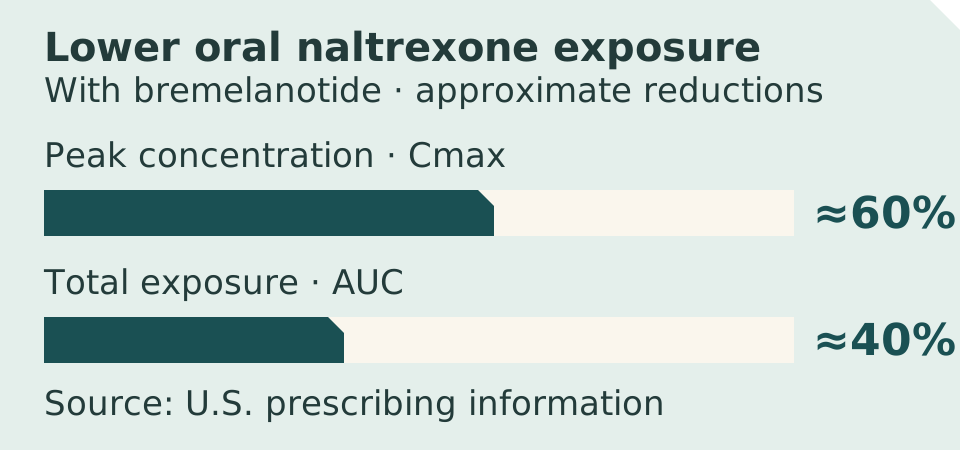
The prescribing information describes reduced oral naltrexone exposure when it is given with bremelanotide. The reported reductions are approximately 60% in Cmax, the peak blood concentration, and approximately 40% in AUC, the total exposure measured over time. Both describe how much naltrexone reaches the circulation; neither is a measure of sexual desire.
The reason matters as much as the figures. Bremelanotide slows gastric motility, interfering with the absorption of a medicine taken orally. The label advises avoiding the combination when oral naltrexone-containing products are being used for alcohol or opioid use disorder, because lower exposure could compromise that treatment.
I’d expected sildenafil to be the important companion medicine, but naltrexone demands far more attention. An addiction medicine gives the question a much wider reach into someone’s existing care.
A swallowed medicine can be affected
The injection route can make the stomach seem irrelevant. Yet the oral naltrexone interaction depends on the movement of stomach contents, not on the medicines sharing an entry point. That is a useful reason to think about the whole medication list during a prescribing assessment.
The finding is specific to oral naltrexone exposure. It supplies no general estimate for every swallowed medicine, and it cannot predict the consequences of an unstudied combination. Extending that mechanism to every tablet in a cupboard goes beyond the specific interaction described.
“Oral” carries real weight in this interaction.
A short description of PT-141 as centrally acting can be accurate and still leave out this practical problem. A person’s other treatment may be doing something essential long before bremelanotide enters the picture.
The intended combination
The older PT-141 and sildenafil experiment in men with erectile dysfunction pursued a different sort of meeting. Central melanocortin activity and peripheral blood-flow effects offered a rationale for combining treatments; the study reported an enhanced erectile response compared with either agent alone.
The combination result persuades me that this research question deserves pursuit, particularly where an existing treatment has fallen short. It leaves the separate questions of tolerability, route, dose selection and the population studied fully alive. The male erectile-dysfunction setting also remains outside bremelanotide’s approved indication.
A useful research question can survive without becoming a home experiment. The trial page puts this early result beside the later women’s studies; effects and cautions cover the burdens that any proposed benefit has to justify.